Choosing an Ethereum wallet is not just about finding an app that displays your ETH balance. The real decision is how your private keys are protected, which networks you can access, and what happens if your phone, computer, or recovery phrase is compromised.
A wallet that works perfectly for daily DeFi trading may be a poor choice for storing a substantial long-term investment. Likewise, an expensive hardware wallet can be unnecessary if you only need to experiment with a small amount of ETH.
This guide compares five established wallet options, explains the difference between hot and cold storage, and helps you choose the best Ethereum wallet for your actual needs.
What Makes an Ethereum Wallet Secure?
An Ethereum wallet does not physically store your cryptocurrency. Your ETH and tokens exist on the blockchain, while the wallet manages the keys used to authorize transactions.
Security depends on several factors:
- Private key storage: Whether keys remain offline or are stored on an internet-connected device.
- Self-custody: Whether you independently control your assets.
- Transaction verification: How clearly the wallet displays addresses, permissions, and transaction details.
- Recovery options: How you restore access after losing a device.
- Software maintenance: Whether the provider regularly addresses vulnerabilities.
There is no universally safest Ethereum wallet. Hardware devices significantly reduce private-key exposure, but they cannot prevent every phishing attack or malicious transaction approval.
Best Ethereum Wallets Compared
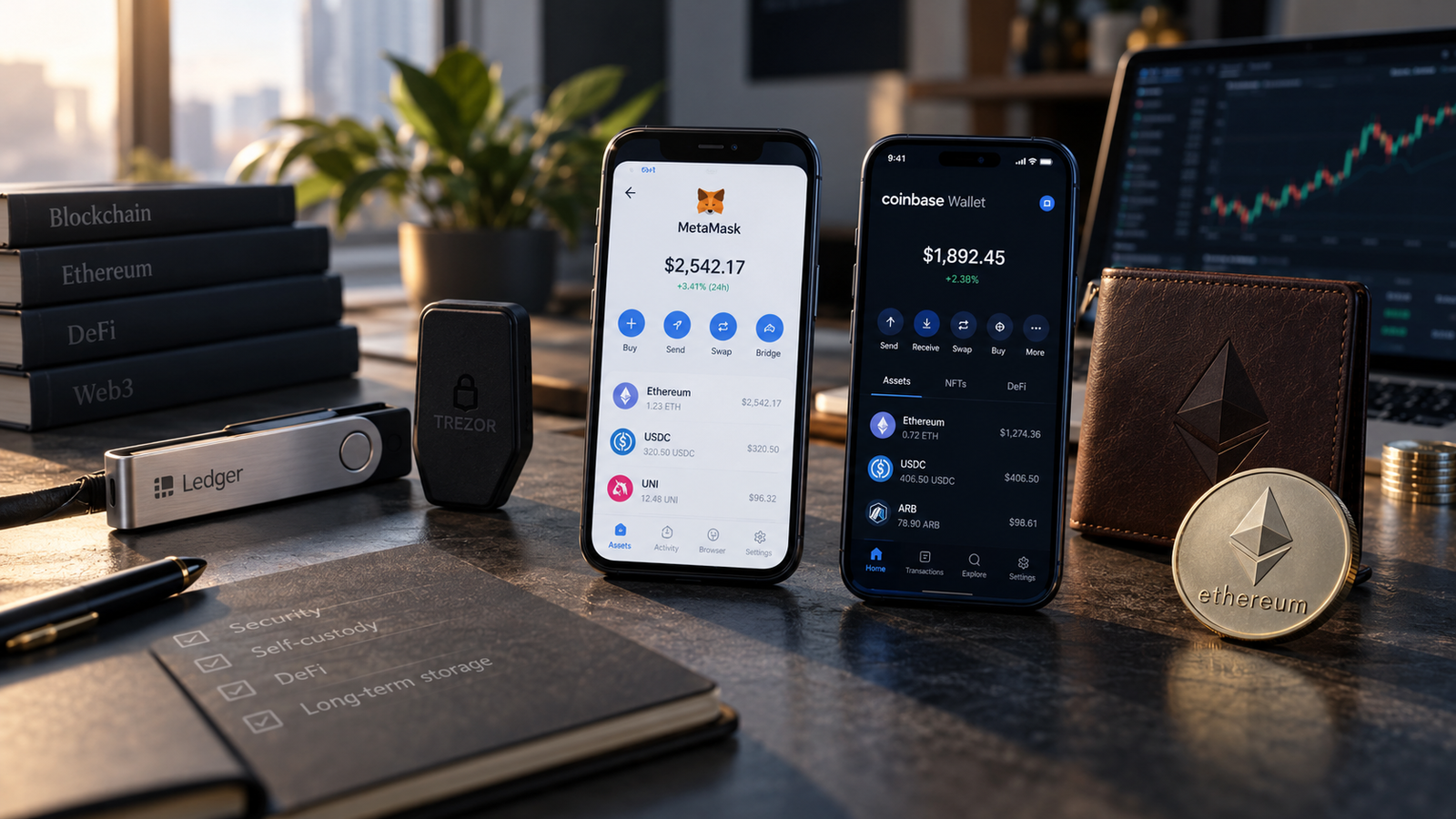
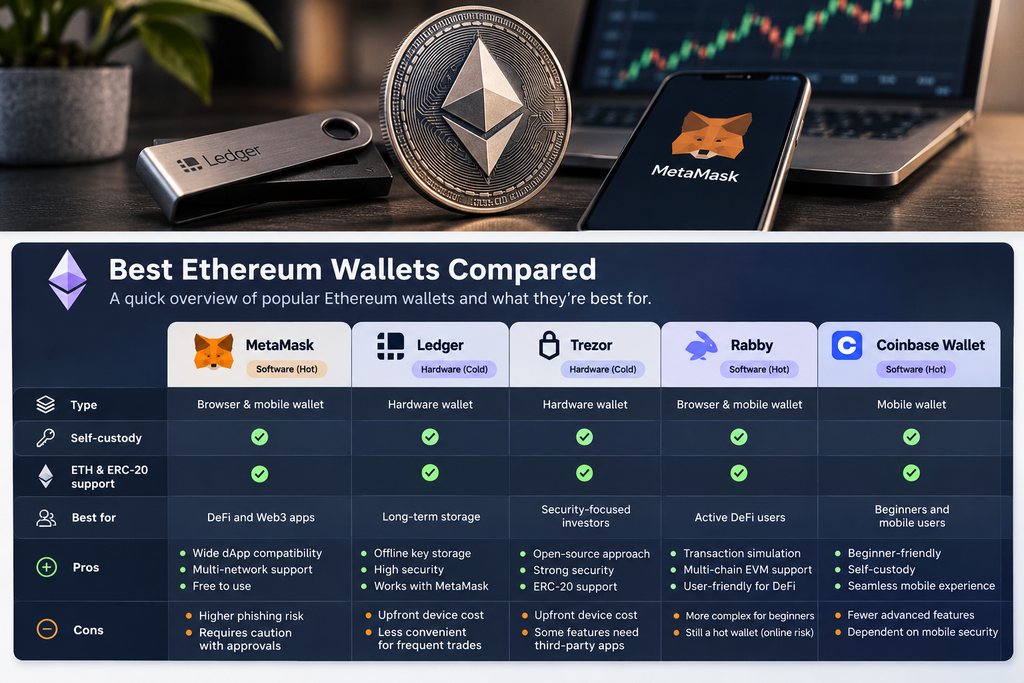
The following five products cover different use cases, from beginner-friendly mobile wallets to dedicated cold storage.
| Wallet | Type | Self-Custody | ETH & ERC-20 | Best For |
|---|---|---|---|---|
| MetaMask | Software | Yes | Yes | DeFi and Web3 applications |
| Ledger | Hardware | Yes | Yes | Long-term storage |
| Trezor | Hardware | Yes | Yes | Security-focused investors |
| Rabby | Software | Yes | Yes | Active EVM users |
| Coinbase Wallet / Base | Software | Yes | Yes | Beginners and mobile users |
All five can support Ethereum assets, but their interfaces, custody models, supported networks, and transaction-verification features differ.
1. MetaMask — Best for Ethereum DeFi and Web3
MetaMask is a popular Ethereum software wallet available through browser extensions and mobile applications.
Its main advantage is compatibility with decentralized applications, NFT marketplaces, and Ethereum-compatible networks.
Users can manage ETH, ERC-20 tokens, and multiple accounts from one interface.
MetaMask also supports connecting compatible hardware wallets, allowing users to interact with DeFi while keeping signing keys on a separate device.
Pros:
- Broad Ethereum application compatibility.
- Supports ERC-20 tokens and multiple EVM networks.
- Free wallet software.
- Hardware wallet integrations.
Cons:
- Browser-based activity increases exposure to phishing.
- Token approvals require careful attention.
- New users may struggle with network selection and transaction details.
Verdict: MetaMask is a strong choice for active Ethereum users, especially when paired with hardware-backed accounts for larger balances.
2. Ledger — Best for Long-Term ETH Storage
Ledger produces hardware wallets designed to keep private keys isolated from ordinary internet-connected devices.
Transactions must be authorized using the hardware wallet, reducing the likelihood that malware on a computer can directly extract private keys.
Ledger devices support Ethereum and compatible tokens through Ledger’s software ecosystem and supported third-party applications.
Pros:
- Hardware-based private key protection.
- Suitable for long-term ETH and ERC-20 storage.
- Integration with compatible Web3 wallets.
- Physical transaction confirmation.
Cons:
- Requires purchasing a device.
- Less convenient for frequent transactions.
- Users must understand recovery phrase security.
- Device compatibility and supported features vary by model.
Verdict: Ledger is worth considering for investors holding significant ETH balances who prioritize protection against remote key theft.
3. Trezor — Best for Transparent Cold Storage
Trezor is another established Ethereum hardware wallet provider.
Models such as Trezor Safe 3 and Safe 5 support Ethereum accounts and ERC-20 tokens through Trezor Suite and compatible third-party interfaces.
Trezor emphasizes independently verifiable software and hardware security features.
Pros:
- Offline private key storage.
- Ethereum and ERC-20 compatibility.
- Integration with MetaMask and other supported applications.
- Strong emphasis on transparency and user-controlled recovery.
Cons:
- Upfront hardware cost.
- Requires physical access for transactions.
- Some advanced Web3 activities require third-party software.
- Capabilities vary between models.
Verdict: Trezor is particularly appealing to users who want an Ethereum cold wallet with strong self-custody principles and transparent security design.
4. Rabby Wallet — Best for Active DeFi Users
Rabby focuses on users who regularly interact with Ethereum-compatible blockchains and decentralized finance protocols.
Its EVM-focused interface is designed to simplify switching between supported networks and reviewing blockchain activity.
Rabby’s transaction simulation and risk information can help users understand what a transaction may do before signing it.
Pros:
- Designed for multi-chain EVM activity.
- Transaction previews and security warnings.
- Convenient for frequent DeFi interactions.
- Compatible with supported hardware wallets.
Cons:
- More complex than a basic storage wallet.
- Internet-connected software remains exposed to endpoint risks.
- Transaction simulations are not guarantees of safety.
Verdict: Rabby is a practical option for experienced users who frequently interact with smart contracts across Ethereum and Layer 2 ecosystems.
5. Coinbase Wallet / Base — Best for Beginners
Coinbase Wallet, which has evolved into the Base-branded app experience, provides self-custodial access to Ethereum assets and decentralized applications.
Importantly, a self-custody wallet is different from holding cryptocurrency in a custodial Coinbase exchange account.
The wallet experience emphasizes accessibility, mobile usability, and interaction with Ethereum-compatible networks.
Pros:
- Beginner-friendly interface.
- Self-custody features.
- Support for ETH and ERC-20 assets.
- Integration with Web3 applications.
Cons:
- Recovery procedures require user attention.
- Software wallet keys may be exposed if a device is compromised.
- Some features and network integrations change over time.
Verdict: A reasonable starting point for newcomers who want a relatively approachable Ethereum wallet for beginners.
Hot Wallet vs Cold Wallet: Which Is Safer?
The most important security distinction is whether your private keys are stored on an internet-connected device.
A hot wallet is typically a mobile, browser, or desktop wallet used for frequent transactions.
A cold wallet keeps private keys offline, usually within a dedicated hardware device.
| Feature | Hot Wallet | Cold Wallet |
|---|---|---|
| Private key environment | Internet-connected device | Offline hardware |
| Typical cost | Free software | Device purchase |
| Daily transactions | Convenient | Requires device confirmation |
| Remote malware exposure | Higher | Lower |
| DeFi access | Direct | Often through connected software |
| Long-term storage | Less ideal for large balances | Generally preferable |
A hardware wallet provides stronger isolation, but it cannot make a malicious smart-contract approval harmless.
A useful approach is to separate funds by purpose: keep spending balances in a software wallet and long-term holdings in a hardware-backed account.
MetaMask vs Ledger: What Is the Real Difference?
The MetaMask vs Ledger comparison is frequently misunderstood because the products are not direct substitutes.
MetaMask is primarily a software interface for managing accounts and connecting to blockchain applications. Ledger is a hardware signing device.
They can work together.
| Feature | MetaMask Software Account | Ledger Hardware Account |
|---|---|---|
| Private keys | Stored on user’s device | Kept within hardware device |
| Transaction authorization | Software-based | Physical hardware confirmation |
| Initial cost | Free | Hardware purchase |
| DeFi compatibility | Broad | Through compatible applications |
| Best use | Everyday Web3 activity | Protecting valuable holdings |
When you connect Ledger to MetaMask, the hardware wallet retains its private keys. MetaMask provides the interface, while Ledger authorizes transactions.
This combination offers a practical balance between security and convenience.
However, never import your hardware wallet’s recovery phrase into MetaMask. Doing so defeats the purpose of hardware-based key isolation.
ERC-20 Support: What to Check Before Choosing
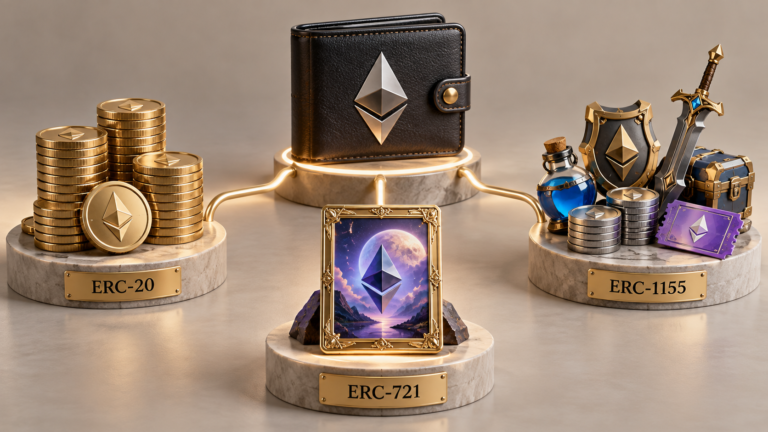
Ethereum wallets commonly support ERC-20 tokens, including stablecoins and numerous DeFi assets.
However, supporting Ethereum does not automatically mean supporting every blockchain network or displaying every token correctly.
Before selecting a wallet, verify:
- Ethereum Mainnet support.
- Compatibility with the specific ERC-20 token.
- Support for any required Layer 2 networks.
- Custom token importing when necessary.
- Hardware wallet integration if needed.
For example, USDC can exist on multiple networks. Sending tokens through an unsupported network may leave them inaccessible through the receiving service.
Always verify the token contract, destination address, and network before transferring assets.
Self-Custody vs Custodial Wallets
A non custodial Ethereum wallet gives users control over their private keys or account authorization mechanism.
With traditional self-custody, you are responsible for safeguarding the recovery phrase. Losing both the device and recovery information can result in permanent loss of access.
Custodial services instead manage the keys on your behalf.
| Consideration | Self-Custody | Custodial Storage |
|---|---|---|
| Key control | User | Provider |
| Account recovery | User-managed or wallet-specific | Provider procedures |
| Exchange insolvency exposure | No direct custody exposure | Potentially significant |
| Phishing and signing responsibility | User | Depends on provider |
| Technical responsibility | Higher | Lower |
Self-custody removes dependence on an exchange’s solvency but transfers security responsibility to the wallet owner.
Neither approach eliminates all risks.
How to Secure Your Ethereum Wallet
According to Ethereum.org’s security recommendations, hardware wallets and careful recovery phrase management are among the most important protections available to ETH holders.
Follow these practices before depositing meaningful funds.
Protect Your Recovery Phrase
Never share your recovery phrase with anyone, including supposed wallet support representatives.
Avoid saving it in screenshots, email drafts, cloud notes, or unencrypted documents.
Keep recovery information offline in a secure location. For substantial holdings, consider a durable backup solution.
Verify Transactions Before Signing
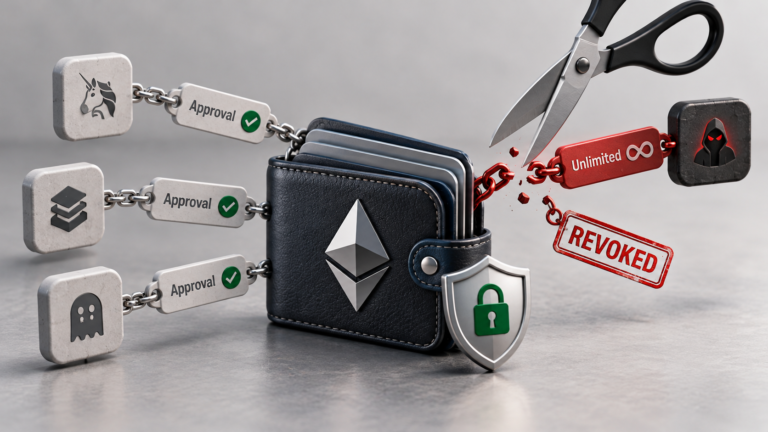
A malicious transaction can compromise assets even if your private keys remain secure.
Inspect destination addresses, approval permissions, and transaction details before confirming.
Avoid unlimited token spending approvals unless genuinely necessary.
Use Separate Wallets for Different Activities
Consider maintaining one account for long-term storage and another for regular DeFi interactions.
This reduces the amount potentially exposed when connecting to unfamiliar applications.
Test Transfers Before Moving Large Amounts
When setting up a new wallet, send a small amount of ETH first.
Confirm that the funds arrive on the intended network and that you can access the account before transferring a larger balance.
Also consider testing your recovery procedure securely before relying on the wallet for long-term storage.
Ethereum Wallet Security: What the Data Shows
Ethereum’s official wallet directory provides a useful snapshot of available features.
In the directory reviewed in October 2026:
| Metric | Wallets Listed |
|---|---|
| Total wallets | 48 |
| Ethereum Mainnet support | 45 |
| NFT support | 38 |
| Hardware wallet support | 35 |
| Layer 2 support | 44 |
| Open-source classification | 29 |
Source: Ethereum.org wallet directory, October 2026.
These figures apply only to wallets included in the directory, not every wallet available worldwide.
They also highlight an important point: security and compatibility features are not universal, even among Ethereum-oriented wallets.
A wallet’s inclusion in a directory does not guarantee that it is free from vulnerabilities.
Which Ethereum Wallet Should You Choose?
For everyday DeFi activity, MetaMask and Rabby offer convenient access to Ethereum applications.
For long-term storage, Ledger and Trezor provide stronger protection against remote private-key theft.
For users getting started with self-custody, Coinbase Wallet’s Base experience can offer a relatively approachable interface.
If you hold substantial assets and regularly use DeFi, combining a hardware wallet with a compatible software interface is often more practical than relying on one hot wallet for everything.
The best wallet for Ethereum is ultimately the one that matches your activity, security knowledge, and ability to maintain reliable backups.
Final Thoughts
A secure ETH wallet should protect your keys without making ordinary transactions unnecessarily difficult.
Hardware wallets are generally better suited to protecting long-term holdings, while software wallets are more convenient for interacting with Ethereum applications.
Regardless of which provider you choose, private-key management, phishing awareness, network verification, and careful transaction approvals matter more than attractive interfaces or marketing claims.
Choose a wallet based on its security model, not simply its popularity.