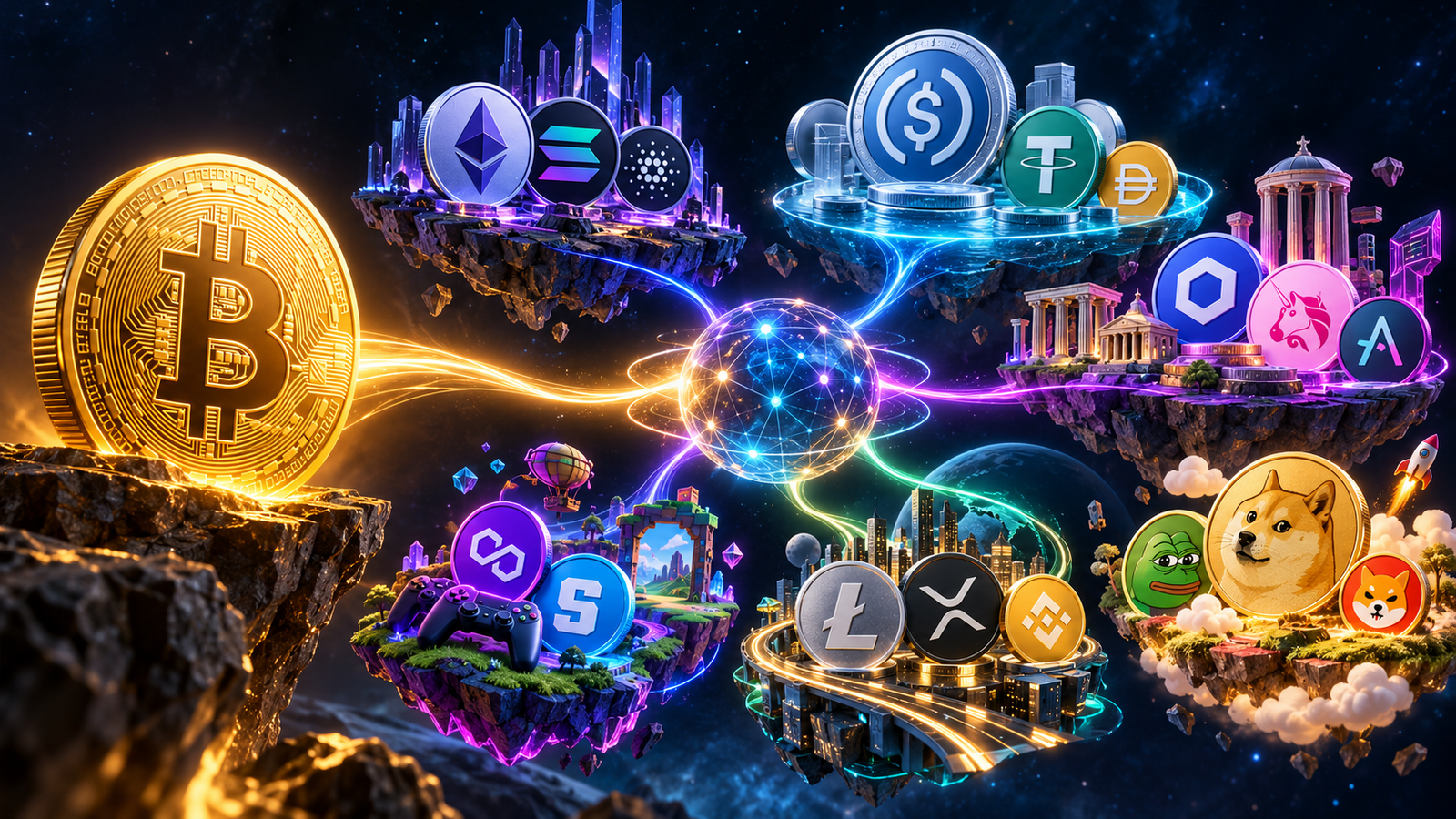
Bitcoin started the cryptocurrency market, but it no longer represents every use case blockchain technology can support. Ethereum introduced programmable smart contracts, Solana built an ecosystem around high-throughput applications, and stablecoins made it possible to transfer dollar-denominated value through public blockchains.
All these assets belong to a broad category known as altcoins.
Some altcoins operate their own blockchain networks. Others exist as tokens issued through smart contracts. Their purpose can range from paying transaction fees to governing decentralized protocols or representing real-world assets.
For investors, understanding the differences matters more than simply following the next trending ticker. Two cryptocurrencies trading at the same price can have completely different supply structures, security models, and economic risks.
What Are Altcoins in Cryptocurrency?
Altcoins are cryptocurrencies other than Bitcoin. The name comes from “alternative coins,” reflecting the emergence of blockchain projects that followed Bitcoin’s launch in 2009.
The category includes major blockchain assets such as Ethereum’s ETH and Solana’s SOL, along with stablecoins, DeFi governance tokens, gaming assets, and numerous smaller cryptocurrencies.
Not every altcoin is designed to compete directly with Bitcoin.
Bitcoin primarily functions as a decentralized monetary network with a predefined issuance schedule and a maximum supply of approximately 21 million BTC.
Other cryptocurrency projects may prioritize smart contract execution, payment stability, application development, or decentralized governance.
The term altcoin describes an asset’s position outside Bitcoin rather than its technical architecture or investment quality.
How Do Altcoins Work?
Altcoins operate through blockchain networks or smart contracts that define how balances, transfers, and other actions are recorded.
Their underlying mechanisms depend on the asset.
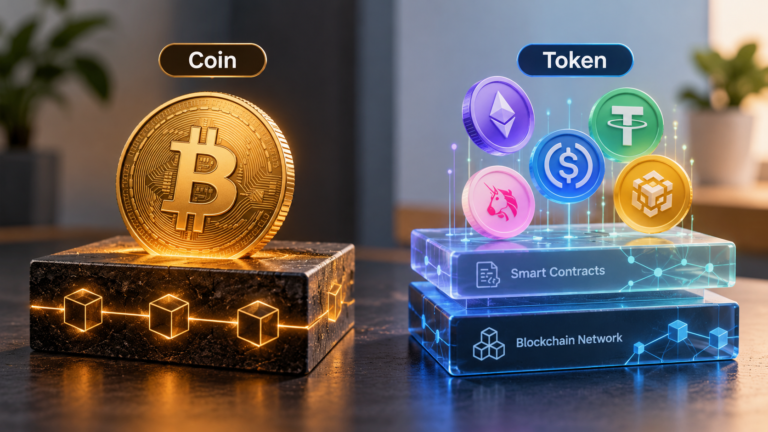
Native cryptocurrencies such as ETH and SOL belong to their respective blockchain networks. They are used to pay transaction fees and participate in network-level economic mechanisms.
Tokens such as UNI or many stablecoins are issued through smart contracts running on existing blockchains.
These tokens generally depend on their host network for transaction processing and settlement.
Coins vs Tokens: The Technical Difference
| Feature | Native Coins | Blockchain Tokens |
|---|---|---|
| Infrastructure | Native to a blockchain | Issued through a host blockchain or token program |
| Examples | ETH, SOL, ADA | UNI, USDC, AAVE |
| Transaction fees | Commonly paid using the native asset | Usually paid using the network’s fee asset |
| Main functions | Fees, staking, transfers | Governance, payments, application utility |
| Security dependency | Underlying blockchain | Host blockchain plus token implementation |
For example, transferring an Ethereum ERC-20 token generally requires ETH to cover the transaction fee.
Holding enough USDC to make a transfer does not automatically mean the wallet has enough ETH to pay for it.
Some applications can sponsor or abstract fees, but this is an additional feature rather than a universal property of altcoins.
Types of Altcoins and Their Main Uses
The cryptocurrency market contains several overlapping categories. A token can serve more than one purpose, so these classifications should not be treated as mutually exclusive.
1. Smart Contract Platform Coins
Smart contract blockchains allow developers to build applications that execute predefined logic without relying on a conventional centralized application server for every state change.
Ethereum, Solana, Cardano, and Avalanche are examples of networks supporting programmable blockchain applications.
Their native cryptocurrencies typically help pay network fees, support staking or other consensus-related functions, and serve as assets within their ecosystems.
The value of these coins may be influenced by network usage, token issuance, investor demand, and the economics of their underlying systems.
However, growing blockchain activity does not automatically produce proportional price appreciation.
2. Stablecoins
Stablecoins aim to maintain a relatively stable value, commonly against the US dollar.
USDC and USDT are well-known examples of dollar-pegged assets.
Unlike most speculative altcoins, stablecoins are designed to reduce price fluctuations against their reference currency.
They can be used for trading, cross-border transfers, liquidity provision, and decentralized finance.
Different stablecoins use different reserve and collateral arrangements. Their risks may include issuer solvency, reserve management, redemption restrictions, smart contract vulnerabilities, and temporary or permanent loss of the intended peg.
A token trading near $1 should not automatically be treated as equivalent to an insured bank deposit.
3. DeFi and Governance Tokens
Decentralized finance protocols use tokens for governance, incentives, and other application-specific functions.
Examples include UNI, associated with Uniswap governance, and AAVE, associated with the Aave ecosystem.
Governance tokens may give holders the ability to vote on protocol proposals, depending on the project’s specific rules.
Some projects also use tokens to coordinate incentives or participate in protocol safety mechanisms.
Owning a governance token does not necessarily entitle the holder to company equity, protocol profits, or a direct share of revenue.
The economic rights must be examined individually.
4. Payment-Focused Altcoins
Some cryptocurrencies emphasize value transfers rather than complex decentralized applications.
Litecoin (LTC) is an example of a cryptocurrency originally developed with a payment-oriented design.
XRP is another asset commonly associated with payment and settlement use cases, although its network architecture differs substantially from Bitcoin’s.
Payment-focused cryptocurrencies may compete on transaction costs, settlement characteristics, liquidity, and adoption.
Their usefulness also depends on practical factors such as merchant acceptance and access to exchanges or payment services.
5. Gaming and Metaverse Tokens
Blockchain gaming projects may issue tokens for in-game economies, governance, rewards, or access to digital services.
Examples include AXS and SAND.
These assets can support player incentives or transactions within their respective ecosystems.
However, token prices may depend heavily on user engagement, reward emissions, and the sustainability of the game’s economy.
Projects that continuously distribute more tokens than users are willing to hold or purchase may experience persistent selling pressure.
6. Meme Coins
Meme coins are cryptocurrencies whose market attention is strongly influenced by online communities, branding, and speculation.
Dogecoin (DOGE) and Shiba Inu (SHIB) are prominent examples.
Although some meme coins develop payment integrations or additional utilities, social sentiment remains an important influence on their markets.
Their prices can move sharply without a corresponding change in network fundamentals.
Low liquidity, concentrated ownership, and speculative trading can increase volatility.
Altcoin Examples: Comparing Major Crypto Assets
The following table illustrates how different altcoins serve different purposes.
| Cryptocurrency | Ticker | Category | Primary Role |
|---|---|---|---|
| Ethereum | ETH | Smart contract platform | Network fees, staking, DeFi infrastructure |
| Solana | SOL | Smart contract platform | Transaction fees, staking, applications |
| Cardano | ADA | Smart contract platform | Network utility, staking, governance |
| Litecoin | LTC | Payment coin | Peer-to-peer transfers |
| XRP | XRP | Payment-oriented asset | Transfers and settlement-related use cases |
| USD Coin | USDC | Stablecoin | Dollar-denominated transfers |
| Uniswap | UNI | Governance token | Protocol governance |
| Aave | AAVE | DeFi token | Governance and protocol-related functions |
| Dogecoin | DOGE | Meme/payment coin | Community-driven transfers and payments |
These examples describe asset functions rather than investment rankings.
Projects may expand or change their use cases over time, and a token’s existence within a popular ecosystem does not guarantee investment returns.
Bitcoin vs Altcoins: What’s the Difference?
Bitcoin and altcoins share some technical foundations, including cryptographic signatures and blockchain-based transaction records. Their economic and operational characteristics can differ considerably.
| Feature | Bitcoin | Altcoins |
|---|---|---|
| Launch | 2009 | Various launch dates |
| Main focus | Decentralized monetary network | Payments, applications, governance, other uses |
| Maximum supply | Approximately 21 million BTC | Varies by asset |
| Consensus | Proof of Work | Proof of Stake, Proof of Work, and other models |
| Smart contracts | More limited base-layer programmability | Often broader programmability |
| Liquidity | Generally deep | Varies significantly |
| Investment risks | Market, custody, protocol risks | Market risks plus project-specific risks |
Bitcoin has a relatively established issuance framework, while altcoin supply models vary widely.
Some projects have capped supplies. Others distribute new tokens through staking rewards, ecosystem incentives, or governance-approved emissions.
Consequently, comparing cryptocurrencies based only on their current prices provides little information about their relative valuations.
How Altcoin Market Capitalization Works
An altcoin’s market capitalization is calculated by multiplying its circulating supply by its market price.
Market Cap = Token Price × Circulating Supply
Suppose two hypothetical cryptocurrencies trade at different prices.
| Metric | Altcoin A | Altcoin B |
|---|---|---|
| Price per token | $0.50 | $50 |
| Circulating supply | 2 billion | 10 million |
| Market capitalization | $1 billion | $500 million |
| Maximum supply | 10 billion | 20 million |
| Fully diluted valuation | $5 billion | $1 billion |
Despite trading at just $0.50, Altcoin A has twice the circulating market capitalization of Altcoin B.
Its fully diluted valuation is also substantially higher because many additional tokens could eventually enter circulation.
This demonstrates why low unit prices do not automatically indicate that a cryptocurrency is inexpensive or undervalued.
Market Cap vs Fully Diluted Valuation
Market capitalization reflects the value of the circulating supply at the current market price.
Fully diluted valuation, or FDV, estimates the value of the total or maximum applicable supply at that same price.
For projects with substantial locked allocations, FDV can be much larger than circulating market capitalization.
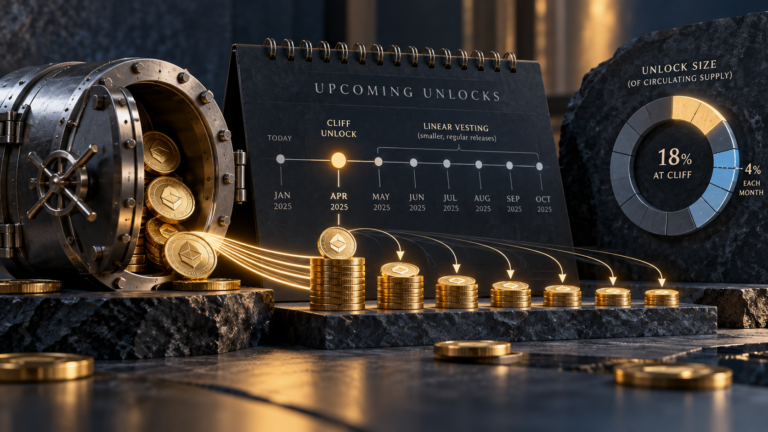
That difference highlights potential future dilution, although token unlocks do not guarantee selling or a particular price movement.
Investors should examine vesting schedules, upcoming unlocks, and supply issuance before comparing valuations.
Why Do Altcoin Prices Rise and Fall?
Altcoin prices are determined by supply and demand in trading markets, but several factors influence those forces.
Network Adoption
Growing transaction activity, application usage, and developer participation can strengthen the case for a blockchain’s long-term relevance.
However, activity should be analyzed alongside fees, incentives, and whether token holders actually benefit from network growth.
Token Supply Changes
New issuance, staking rewards, and scheduled token unlocks can increase circulating supply.
A project with strong demand may absorb these changes, while weak liquidity can amplify price pressure.
Bitcoin Market Performance
Bitcoin often influences wider cryptocurrency sentiment.
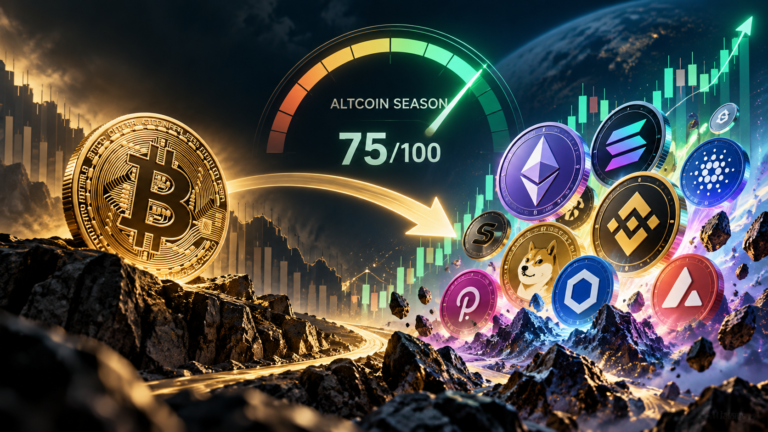
During periods of strong BTC performance, investors may initially concentrate capital in Bitcoin before rotating into other assets.
The Altcoin Season Index attempts to measure how broadly altcoins outperform Bitcoin over a rolling 90-day period.
Liquidity and Exchange Listings
Listings on major exchanges can improve market accessibility, but they do not guarantee sustainable demand.
For smaller altcoins, limited order-book depth means relatively modest trades can produce large price movements.
Regulation and Security Events
Regulatory developments, smart contract exploits, network outages, or governance disputes can materially change an altcoin’s risk profile.
These events may affect individual projects even when the broader cryptocurrency market remains stable.
Are Altcoins Riskier Than Bitcoin?
Many altcoins carry additional risks because they depend on smaller ecosystems, newer technology, concentrated token ownership, or less-developed markets.
The degree of risk varies significantly between projects.
For example, a widely used stablecoin faces a different set of risks than a low-liquidity meme token.
Similarly, a native cryptocurrency securing an established blockchain differs from a governance token with limited economic rights.
Common Altcoin Investment Risks
| Risk | Why It Matters |
|---|---|
| Market volatility | Prices can fall sharply during market stress |
| Token dilution | New supply can reduce existing holders’ proportional share |
| Smart contract vulnerabilities | Exploits may cause losses or disrupt applications |
| Low liquidity | Large trades may cause substantial price slippage |
| Concentrated ownership | Major holders can influence market conditions |
| Governance risks | Contract upgrades or voting decisions may change token economics |
| Regulatory uncertainty | Rules may affect availability, issuance, or trading |
High potential returns do not eliminate these structural risks.
How to Evaluate an Altcoin Before Investing
A useful starting point is to examine the project’s economics separately from its promotional narrative.
The following factors deserve attention.
- Utility and demand: What purpose does the token serve, and does that purpose create recurring demand?
- Supply structure: How many tokens circulate, how many remain locked, and when will new tokens be released?
- Market valuation: How do market cap and FDV compare with similar projects?
- Liquidity: Can meaningful positions be bought or sold without excessive slippage?
- Token ownership: Are allocations concentrated among founders, private investors, or treasury wallets?
- Security: Has the protocol experienced major incidents, and how are contracts and administrative permissions managed?
- Economic sustainability: Does usage depend heavily on temporary incentives or continued token issuance?
No single metric can establish whether an altcoin is a sound investment.
A project may have strong technology but unfavorable token economics, while a highly traded asset may have little underlying utility.
Frequently Asked Questions
What are altcoins in simple terms?
Altcoins are cryptocurrencies other than Bitcoin. They include native blockchain coins, stablecoins, governance tokens, meme coins, and other digital assets.
Is Ethereum an altcoin?
Yes. Under the conventional definition, Ethereum’s native cryptocurrency ETH is an altcoin because it is not Bitcoin, even though Ethereum is one of the largest blockchain ecosystems.
How many types of altcoins are there?
There is no fixed number of categories. Common classifications include smart contract platform coins, stablecoins, payment coins, DeFi tokens, gaming tokens, and meme coins. A cryptocurrency may fit several categories.
Are all altcoins built on Ethereum?
No. Some altcoins operate on independent blockchains, including Solana, Litecoin, and Cardano. Others are tokens issued on Ethereum or additional blockchain networks.
What is the difference between a coin and a token?
A coin is native to its blockchain, while a token is created using infrastructure provided by another blockchain. Both can be classified as altcoins.
Can altcoins outperform Bitcoin?
Yes. Some altcoins outperform Bitcoin during particular market periods, but relative performance changes over time. Higher volatility can also produce larger losses.
Are stablecoins considered altcoins?
Yes, under the broad definition of cryptocurrencies other than Bitcoin. However, market indexes may exclude stablecoins when evaluating speculative altcoin performance because their prices are designed to track reference assets.
Can an altcoin have an unlimited supply?
Yes. Supply rules depend on the individual cryptocurrency. Some have fixed maximum supplies, while others use ongoing issuance mechanisms. The absence of a hard cap does not by itself establish whether a token is inflationary at a particular time.